
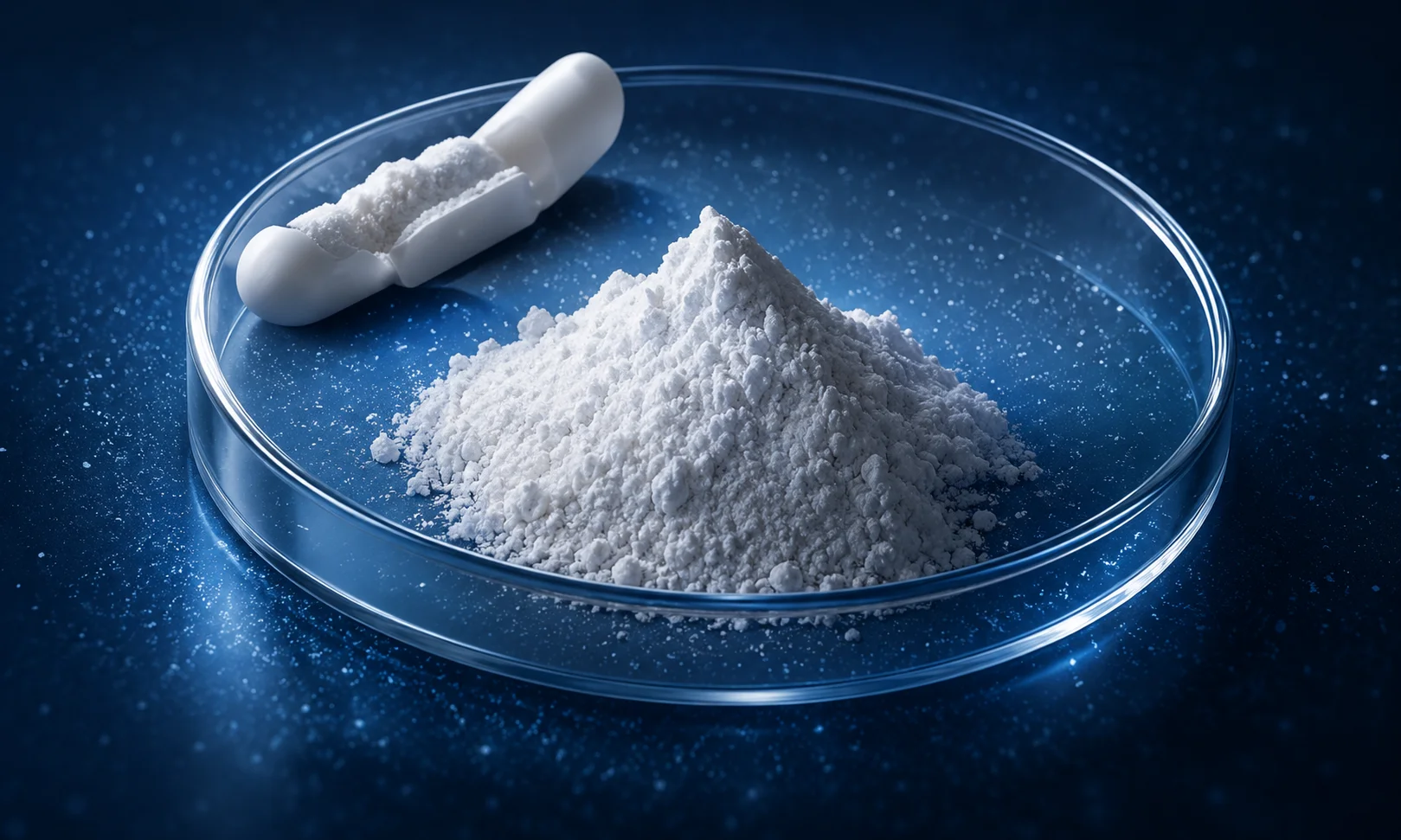
Peptides are sensitive compounds. Their stability can be affected by moisture, temperature, light, oxygen, and handling conditions. This is why many research peptides are supplied in lyophilized form instead of as ordinary “raw” or exposed powder.
Lyophilized peptides are freeze-dried peptides. During lyophilization, water is removed under controlled low-temperature and vacuum conditions. The goal is to create a dry, stable powder that is easier to store, transport, and reconstitute when needed.
What Does Lyophilized Mean?
Lyophilized simply means freeze-dried.
The process usually involves freezing the material and then removing water through a vacuum drying process. This helps reduce the amount of moisture left in the compound. Since moisture can speed up peptide degradation, removing water can help improve long-term stability.
Many peptides are commonly formulated as lyophilized products because this form can help prolong storage stability compared with liquid formulations. However, peptides can still degrade in solid form, so correct storage remains important.
What Is “Raw” Peptide Powder?
The term raw peptide powder is often used loosely in the market. It may refer to peptide material that has not been properly finished, stabilized, filtered, packed, or verified for a final research-use format.
Raw powder is not automatically unsafe or poor quality, but it may be more exposed to environmental risks such as:
Moisture absorption, oxidation, contamination during handling, inconsistent particle condition, and reduced storage stability.
This is why the form of the peptide matters. A peptide may be chemically correct, but if it is not handled and stored properly, its quality can decline over time.
Why Moisture Is a Problem
Water is one of the biggest enemies of peptide stability. Moisture can support chemical degradation pathways such as hydrolysis, where water contributes to the breaking of chemical bonds. It can also create better conditions for contamination risks if handling and packaging are poor.
Lyophilization helps by reducing water content, which can slow moisture-related degradation. This does not make the peptide indestructible, but it gives it a better chance of remaining stable when stored correctly.
Why Lyophilized Peptides Are More Stable
Lyophilized peptides are usually more stable because they are dry, compact, and less reactive than peptides kept in solution. In general, storing peptides in lyophilized form at low temperatures is recommended to minimize degradation. MilliporeSigma, for example, recommends storing peptides in lyophilized form at –20°C or –80°C to help prevent or reduce degradation.
The main stability advantages include:
Lower moisture exposure: Less water means a lower risk of water-driven breakdown.
Better storage life: Freeze-dried peptides are usually easier to store for longer periods when sealed and kept cold.
Improved handling: Lyophilized material is easier to measure, ship, and reconstitute when needed.
Reduced degradation risk: Dry form can reduce some degradation pathways compared with liquid form.
Lyophilized Does Not Mean “No Risk”
Lyophilized peptides are more stable, but they still need careful handling. Heat, light, oxygen, repeated freeze-thaw cycles, and poor sealing can still affect quality.
Some peptide sequences are naturally more sensitive than others. For example, peptides containing certain amino acids may be more prone to oxidation, so storage recommendations can vary depending on the peptide sequence. GenScript notes that lyophilized peptides are generally stored at –20°C away from bright light, but stability depends on the individual sequence.
Why Testing Still Matters
Stability is only one part of quality. A peptide should also be checked for identity, purity, content, and contamination risks where applicable.
A proper Certificate of Analysis can help confirm important details such as:
Identity, purity percentage, batch number, test method, date of analysis, and other quality markers.
For research products, batch verification is important because it gives buyers and researchers confidence that the material matches what is stated on the label.
Final Thoughts
Lyophilized peptides are generally preferred because they are more stable, easier to store, and less vulnerable to moisture-related degradation than liquid or poorly handled raw formats. But lyophilization is not a magic solution. Proper storage, sealed packaging, temperature control, and third-party testing are still essential.
For researchers, the safest approach is simple: choose peptides that are properly lyophilized, clearly labeled, batch verified, and stored according to the supplier’s instructions.
Disclaimer: This article is for educational and research information only. It is not medical advice and does not recommend using any peptide product for diagnosis, treatment, or prevention of disease.