
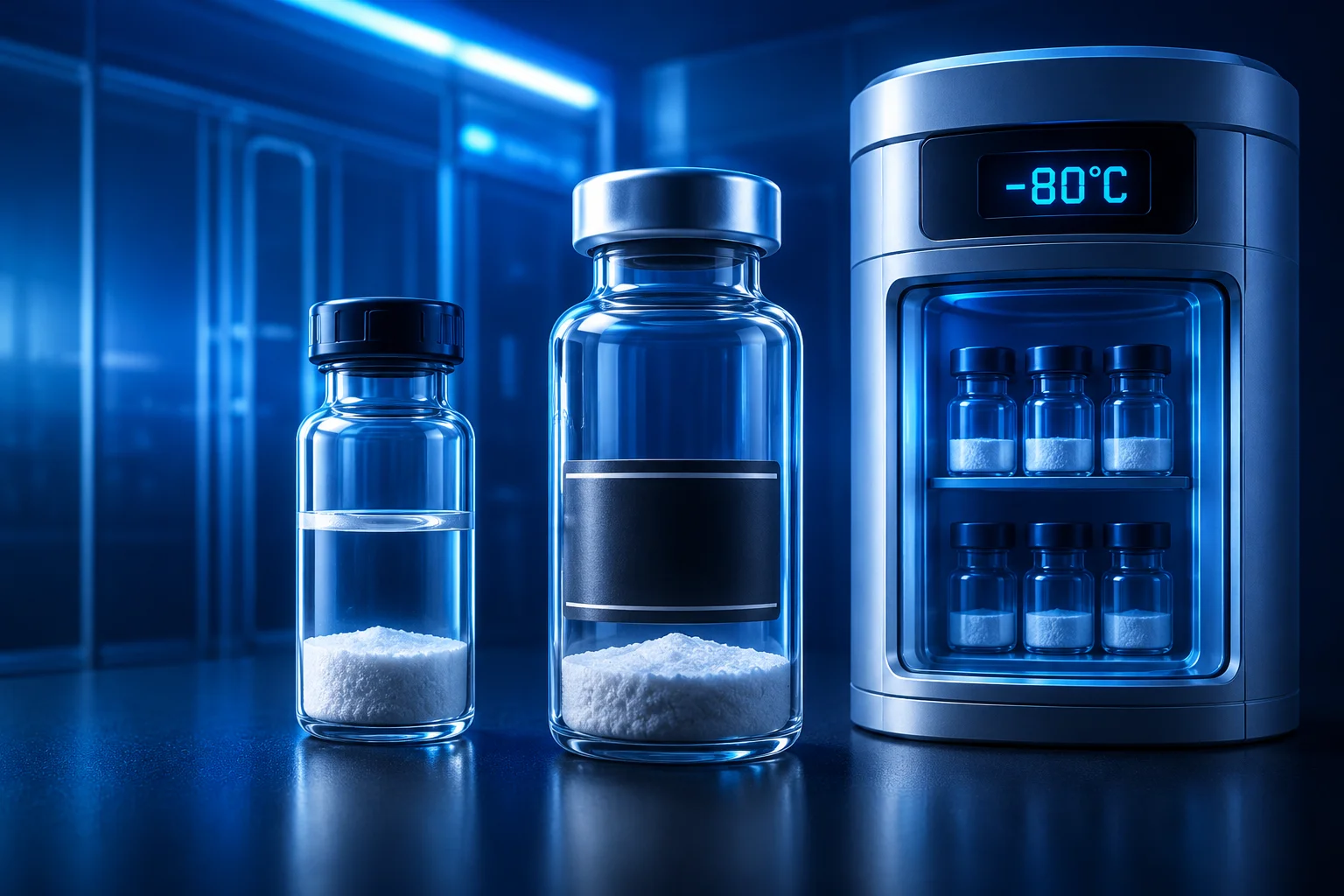
Peptides are sensitive research compounds. Their quality can be affected by heat, moisture, light, oxygen, and repeated handling. Even when a peptide is manufactured correctly, poor storage can reduce its stability over time.
This is why proper storage is important. Good storage helps protect peptide integrity, preserve purity, and reduce the risk of degradation before use in a research setting.
Why Peptide Storage Matters
Peptides are short chains of amino acids, and their structure can be delicate. Some peptides are more stable than others, but many can break down if they are exposed to unsuitable conditions. Moisture, temperature changes, and light exposure are some of the most common factors that can affect peptide quality.
In research environments, peptides are often supplied in lyophilized form. Lyophilized means freeze-dried. This dry form is usually preferred because it helps reduce moisture-related degradation and can improve storage stability when handled correctly.
Keep Lyophilized Peptides Cold
Most lyophilized peptides should be stored cold, especially for long-term storage. Many peptide suppliers recommend storing lyophilized peptides at freezer temperatures, commonly around -20°C, and sometimes -80°C for longer-term preservation or more sensitive peptides. Storage needs can vary depending on the specific peptide sequence and supplier instructions.
A simple rule is:
Short-term storage: follow the supplier label.
Long-term storage: keep lyophilized peptides frozen and sealed.
Sensitive peptides: use colder storage where recommended.
Avoid leaving peptides at room temperature for long periods unless the supplier clearly states that it is acceptable.
Protect Peptides from Moisture
Moisture is one of the biggest threats to peptide stability. Once moisture enters the vial, it can increase the chance of degradation. This is especially important for lyophilized peptides, because their dry form is part of what helps keep them stable.
To reduce moisture exposure:
Keep vials tightly sealed.
Avoid opening vials repeatedly.
Allow frozen vials to reach room temperature before opening to reduce condensation.
Store with desiccant where appropriate.
Do not expose the powder to humid air for longer than necessary.
Condensation is a common mistake. If a cold vial is opened immediately after removing it from the freezer, moisture from the air can collect inside the vial. Letting the sealed vial warm slightly before opening can help reduce that risk.
Protect Peptides from Light
Light exposure can contribute to degradation for some compounds. This is why peptides are often stored in amber vials, dark containers, or light-protected packaging.
A good storage setup should keep peptides away from direct sunlight and strong laboratory lighting. Store them in a dark freezer box, sealed pouch, or protective container.
Be Careful After Reconstitution
Once a peptide is reconstituted into liquid form, it is usually less stable than the dry lyophilized form. Liquid peptides may be more vulnerable to degradation, contamination, and repeated temperature changes.
After reconstitution, storage instructions depend on the peptide, solvent, concentration, and intended research protocol. In general, reconstituted peptides should be kept cold, protected from light, and handled using clean laboratory technique.
Avoid repeated freeze-thaw cycles where possible. If a peptide solution needs to be used multiple times, researchers often divide it into smaller aliquots so each portion is thawed only once.
Minimize Handling
Every time a vial is opened, moved between temperatures, or exposed to air, the risk of degradation or contamination increases. Good handling habits can help protect quality.
Use clean tools.
Avoid repeated opening and closing.
Label vials clearly with the date received and date reconstituted.
Keep storage conditions consistent.
Return peptides to proper storage quickly after use.
Small handling mistakes can make a big difference, especially with sensitive research compounds.
Check the Certificate of Analysis
Storage is only part of peptide quality. A properly stored peptide should also come with verification documents such as a Certificate of Analysis. A good COA may include identity, purity, batch number, test method, and analysis date.
This helps confirm that the peptide was tested before use. Proper storage then helps maintain that quality for as long as possible.
Final Thoughts
Proper peptide storage is simple but important. Keep lyophilized peptides cold, dry, sealed, and protected from light. Avoid unnecessary handling, moisture exposure, and repeated freeze-thaw cycles. After reconstitution, follow the supplier’s instructions and use careful laboratory handling.
The better the storage, the better the stability. For research products, this helps protect purity, consistency, and confidence in every batch.
Disclaimer: This article is for educational and research information only. It is not medical advice and does not recommend using any peptide product for diagnosis, treatment, or prevention of disease. Research-use products should be handled according to applicable laws, safety standards, and supplier instructions.